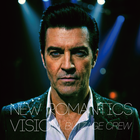
About Blitzage Night
What is Blitzage Night? Blitzage Night is a party born out of deep respect for the "BLITZ CLUB"—the holy ground of the "New Romantic" culture that heavily influenced the global music scene in the early 1980s—and its central figure, Steve Strange.
The community "Blitzage" was originally formed in 2013 to celebrate the first-ever Japan tour of the legendary band "VISAGE." Today, serving as the parent body, we envision this event as an experimental ground to inherit, reconstruct, and project the music, art, and spirit of that era into the modern age.
The Roots: New Romantics & Blitz Club
Emerging from the Grey Winter "New Romantics" blossomed as a counter-culture to Punk Rock among the youth of London.
Britain at the time was suffering through the "Winter of Discontent" (1978–1979), a gloomy era where public service strikes left streets overflowing with rubbish and society in stagnation. The Punk movement, which exploded in 1976, initially countered this with explosive energy and the nihilism of "No Future."
However, over time, Punk itself had turned into a "uniform." Steve Strange and Rusty Egan were disillusioned by the fact that what was once a revolution had devolved into violent rituals and a hangout for mobs lacking creativity.
"We are looked down upon simply because we don't dress 'normal'." Facing a reality where the "liberation of the individual"—which Punk was supposed to hold—was lost to new peer pressure, creative youths sought a new "Sanctuary" where they could express themselves safely yet radically.
The Birth of the Legendary "BLITZ" Steve and Rusty, who had been running "A Club for Heroes" (David Bowie Night), moved their venue to a World War II-themed wine bar in Covent Garden called "Blitz," where the concept evolved further.
The event was held every Tuesday. The reason for choosing the middle of the week was clear: to eliminate the "ordinary people" who only came out on weekends and the drunks with no creativity, and to select only art school students and night dwellers who dedicated their lives to fashion and music. (This mentality mirrors the "London Nite" held on Tuesdays at the disco "Tsubaki House" in Shinjuku, Japan, in the early 1980s).
Starting in February 1979, this night instantly became the epicenter of London's underground. Located near art schools like Central Saint Martins, it functioned as a "Petri dish" for budding fashion designers, musicians, and filmmakers.
They inherited the DIY spirit of Punk but shifted the vector from "Destruction" to "Construction," sublimating themselves into works of art.
Revolutionary Sound & Strict Door Policy Rusty Egan, who served as the DJ, rejected the Soul and Disco music that dominated the charts at the time. He mixed the experimental side of David Bowie, Art Rock, Funk, and the mechanical electronic sounds of Germany's Kraftwerk and Japan's YMO. This fusion of "Electronic Sound (Synthesizer)" and "Humanity (Vocals/Melody)" became the foundation of the New Romantic sound.
What definitively established the myth of the Blitz Club was Steve Strange's strict door policy. Standing at the door, his criteria were not "Are you famous?" or "Are you rich?", but solely "Are you creative?" and "Is there a sense of surprise?" This style, diametrically opposed to modern commercial nightlife that sells high-priced VIP seats to offer a sense of superiority, thrust an existential question upon visitors: "What are you expressing?"
The Icon: VISAGE
The Choir Born from the Church The "Choir" born from this "Church" called Blitz Club was VISAGE. Initially, it started as a studio project to create music for Rusty Egan to play at the club. However, the lineup presented the appearance of a "supergroup" representing the scene, including Midge Ure and Billy Currie from Ultravox, and Dave Formula from Magazine.
Notable was the role of Steve Strange. Against the intricate electronic architecture constructed by Midge Ure and the others, Steve inhabited it, adding narrative and image. He was the "Face." It was a precursor to the 80s MTV culture where "Image" preceded "Substance," and simultaneously the ultimate form of self-realization paved by David Bowie—the idea that "a nobody can become who they want to be."
In 1980, the single "Fade to Grey" became a massive global hit. New Romantics leaped from subculture to the mainstream.
The fact that David Bowie himself visited the Blitz Club and scouted the regulars for his "Ashes to Ashes" music video was a historic moment where the "Father" (Bowie) acknowledged his children and passed on the throne.
VISAGE & Blitzage
The Miracle of 2013, and the Farewell Although VISAGE disbanded in 1985, Steve Strange reformed the band in 2013.
Releasing the album Hearts and Knives, they were reborn as a tangible band capable of live performance. At this time, "Blitzage" was formed to celebrate VISAGE's first Japan tour and to serve as the opening act. We stood on the same stage as our idols, not just as musicians, but as a creative collective crossing boundaries including graphic designers and video artists.
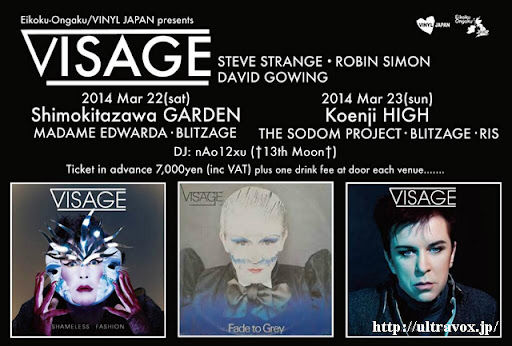
During their stay in Japan, members of VISAGE and Blitzage spent much time together. The new member Logan Sky used the YAMAHA SS-30 (a string synthesizer iconic to VISAGE) provided by Blitzage for their live performance. In a later interview, he stated: "For me, admiring Japan and YMO, this was a very stimulating experience. I cannot thank the other bands enough, especially Blitzage and RIS." — Logan Sky Interview (https://www.punkglobe.com/loganskyinterview0215.php)
Steve Strange also kindly offered, "Come to London, let's play a gig together."
Loss of a Legend
However, two years later in February 2015, he collapsed from a heart attack while on vacation in Egypt and passed away suddenly. At his funeral, artists who had taken flight to the world from the Blitz Club gathered. Boy George and the Kemp brothers of Spandau Ballet carried his coffin. This scene demonstrated to the world that the New Romantic movement was not merely a fleeting trend, but was connected by a strong "Bond."
Blitz Club Host & Blitz Kids List
Core Members (The Hosts)
The central figures who created the nights at Blitz.
- Steve Strange: Organizer, Doorman, Visage Vocals.
- Rusty Egan: Organizer, DJ, Visage Drums.
- Princess Julia: Went from cloakroom attendant to DJ. Remains a London fashion icon today.
Fashion & Design (The Look Creators)
A group centered around Central Saint Martins students who later became world-renowned designers.
- John Galliano: Later became a designer for Dior, etc. Was a student and regular at the time.
- Stephen Jones: World-famous milliner (hat designer).
- Stephen Linard: Designer. Also worked on costumes for David Bowie.
- Kim Bowen: Fashion editor, stylist.
- David Holah & Stevie Stewart (BodyMap): Later founded the brand "BodyMap."
- Darla Jane Gilroy: Designer. Appeared in Bowie's "Ashes to Ashes" MV.
- Michele Clapton: Costume designer known for Game of Thrones, etc.
- Judi Frankland: Designer. Created costumes for "Ashes to Ashes."
Musicians & Performers
Stars who emerged from Blitz or were regulars.
- Boy George: Culture Club. Was working the cloakroom at the time (taking over from Julia).
- Marilyn: Singer. Boy George's best friend and "another blonde icon."
- Spandau Ballet: Essentially the house band of Blitz.
Tony Hadley, Gary Kemp, Martin Kemp, Steve Norman, John Keeble. - Sade (Sade Adu): Later a global singer. Was studying fashion at Saint Martins.
- Jeremy Healy: Haysi Fantayzee, DJ.
- Kate Garner: Haysi Fantayzee.
- Martin Degville: Sigue Sigue Sputnik.
- Siobhan Fahey: Bananarama.
- Gene October: Vocals for Chelsea.
Art, Media & Culture
Artists and expressors who colored the scene with their unique styles.
- Philip Sallon: Socialite, event promoter. A presence even Steve couldn't defy.
- Michael Clark: Dancer, Choreographer.
- Cerith Wyn Evans: Contemporary artist, filmmaker.
- John Maybury: Film director, video artist.
- Chris Sullivan: Blue Rondo à la Turk, founder of The Wag Club, writer.
- Robert Elms: Writer, broadcaster. Verbalized the scene in The Face magazine.
- Perry Haines: Involved in the founding of i-D magazine. Stylist.
Legendary Patrons (The Inspirations)
Not "Blitz Kids" themselves, but special adults who recognized them and visited.
- David Bowie: His visit and scouting of regulars for the "Ashes to Ashes" MV made the movement known to the world.
- Derek Jarman: Film director.
- Zandra Rhodes: Fashion designer.
Investigation Report: Re-evaluation of the Legendary Club "Blitz" and the Design Museum Exhibition /
A major exhibition focusing on the legendary 1980s nightclub "Blitz" is currently being held at The Design Museum in London. The news that the "Blitz Kids"—many of whom appeared on the "Steve Strange Funeral Guest List" previously discussed—gathered to celebrate the opening has garnered significant attention.
The following is a summary of the exhibition details and an analysis of why "Blitz" is currently being re-evaluated within the creative industry.
1. Exhibition Overview
- Title: Blitz: The Club That Shaped The 80s
- Venue: The Design Museum (Kensington, London)
- Dates: September 20, 2025 – March 29, 2026
- Status: Currently Open
2. Opening Event and Attendees
The headline "Legendary Blitz Kids unveil..." refers to the opening event of this exhibition. The following key members visited the venue to cut the ribbon. They are the "protagonists" of this story, the very same individuals
listed on the funeral guest list for Steve Strange.
- Rusty Egan: Blitz co-founder and DJ.
- Gary Kemp: Spandau Ballet guitarist.
- Fiona Dealey: Costume designer from the era.
- Robert Elms: BBC Broadcaster (formerly a writer for The Face).
Although Steve Strange has passed away, his legacy and aesthetic have been inherited by his former comrades and successfully restored as "Art" within a contemporary museum setting.
3. Exhibition Features: An Immersive Experience
The exhibition is not merely a display of costumes; the primary focus is on recreating the atmosphere of the era.
- Spatial Reconstruction: The Blitz Club’s bar counter and dance floor have been recreated to near full scale. Even bottles of cheap beer (Schlitz) are positioned to transport visitors back to 1980 Covent Garden through sight, sound, and atmosphere.
- Digital Rusty Egan: A motion-captured "Digital Avatar" of DJ Rusty Egan plays inside the venue, spinning the actual setlists from that time.
- Unreleased Archives:
Steve Strange’s Costumes: Leather outfits actually worn by him, and the costume used in David Bowie’s "Ashes to Ashes" music video (worn by Darla Jane Gilroy). - Rare Footage: Very rare live footage from Spandau Ballet’s debut era, restored in 4K.
- Ephemera: Flyers, membership cards, and original artwork from the inaugural issues of magazines like i-D and The Face, sourced from private collections.
4. Analysis: Why is Blitz Being Re-evaluated Now?
This exhibition is more than just nostalgia. The fact that "Blitz created the 'OS' (Operating System) for the modern creative industry" is being re-evaluated from both academic and industrial perspectives. The reasons are summarized in four main points:
① The Birthplace of "Style Press" and Visual Culture
Blitz was the incubator for legendary magazines (Style Press) such as The Face and i-D. The grammar of the modern "culture magazine"—treating music, fashion, and graphic design as equals—was invented here. Masters like Neville Brody (typography) and Nick Knight (photography) launched their careers from this scene.
② Meritocracy of Style over Class
Steve Strange’s famous door policy represented an extreme "Meritocracy of Style." It didn't matter if you were rich or poor; all that mattered was whether you were creative. The story of impoverished students from Central Saint Martins (like John Galliano) changing the world through aristocratic dress—this "fusion of DIY spirit and ambition"—is now studied as a precursor to modern influencer culture and the creator economy.
③ Pioneers of Gender Fluidity
The fashion that nullified the boundaries between men and women, represented by Boy George and Marilyn, resonates strongly with the modern contexts of LGBTQ+ and Diversity. The attitude of "designing who you are by yourself" mirrors the values of Gen Z and is being reinterpreted as a practice of identity politics.
④ From "Punk" to "New Romantics" (Aufheben)
While Punk proclaimed "No Future" (Destruction), the Blitz Kids steered the helm toward "My Future" (Creation). The true value of the New Romantics lies in constructing "new beauty" from the rubble (second-hand clothes and cheap materials) after the destruction. It is highly valued as a case study in urban sociology regarding how youth create culture amidst economic recession.
Conclusion
The fact that The Design Museum is hosting this exhibition signifies that Blitz is no longer just a "subculture" (a playground for a few youths), but has been elevated to official history as "an important art movement in British design history."
NEW ROMANTICS GUIDE
NEW ROMANTICS SOUND GUIDE
1. Definition
The "New Romantics" sound possesses a highly specific and unique aesthetic that sets it apart from generic "80s Pop."
Defined in a single phrase, it is a sound that integrates "the coldness of electronics" and "the hot groove of Soul/Disco" through "the aesthetic of Glam Rock."
2. The 5 Core Elements of the New Romantic Sound
① Synthesizers: Analog "Thickness" and "Coldness"
The protagonists are the state-of-the-art analog synthesizers of the era. However, unlike the "mechanical" approach of Techno-pop (YMO or Kraftwerk), the goal is a more orchestral and emotional expression.
- The String Machine: Heavy use of "String Ensemble" tones from instruments like Solina or ARP. This creates a majesty similar to classical music and evokes a tragic mood (Melancholy).
- Icy Leads: Sharp, piercing lead sounds that feel cold as ice.
- Key Gear: Jupiter-8, Prophet-5, ARP Odyssey, Minimoog.
② Rhythm: "White Funk"
This is the most critical element. While using synthesizers, the ultimate goal was to create "dance music." It is a unique groove resulting from the reinterpretation of Black music rhythms (Funk, Disco) through a post-punk white sensibility.
- Mechanical Disco: Based on the disco "four-on-the-floor" kick, but with a slightly harder, more mechanical beat (using drum machines like the LinnDrum or CR-78).
- Slap Bass: Heavy, undulating basslines that frequently utilize slap technique.
- Chic Guitar: Rhythm guitar strumming (scratchy funk style) heavily influenced by Nile Rodgers (Chic).
③ Bassline: The Allure of Fretless
A major characteristic is the frequent use of fretless bass (bass without metal frets) in addition to standard bass.
- Effect: Because the pitch slides smoothly, it creates a unique "whining" or singing quality. This lends the track an "Oriental mystery" or a "nocturnal dampness."
- Icon: Mick Karn (Japan) represents the pinnacle of this style.
④ Vocal Style: Crooning and Drama
Rejecting the "screaming" of Punk, this style adopts a "Crooner" approach modeled after Frank Sinatra or David Bowie (Berlin era).
- Low-End Focus: A baritone voice that sings loudly and clearly.
- Theatrical Expression: Dramatic singing infused with excessive emotion, akin to opera or musicals.
- Narcissism: A sexy, aesthetic resonance where the singer seems intoxicated by their own voice.
⑤ Spatial Processing: Gated Reverb and "Artificial Spaciousness"
The entire sound is treated with an "artificial reverberation" that could not exist in reality.
- Gated Reverb: A technique where a flashy reverb is applied to the snare drum ("Bam!") and then abruptly cut off. It is synonymous with the 80s sound, pioneered by this movement.
- Dreamy Atmosphere: Creating a fantastical spatial design, as if inside a mist.
3. Essential References
A. The Gods (Origins and Apex)
The "parents" of the New Romantic movement. Their aesthetic and sound are the starting point for everything.
- David Bowie
Overview: Specifically the cold experimentation of the Berlin Trilogy (Low, Heroes, Lodger) and the sound of Scary Monsters (1980).
Vocal Style: A theatrical, sometimes cold, sometimes passionate crooner style.
Essential Tracks: "Ashes to Ashes", "Fashion", "Heroes"
- Roxy Music / Bryan Ferry
Overview: "Glamorous decadence" and the "introduction of the saxophone." A fusion of Bryan Ferry's dandyism and early Brian Eno's strange electronic sounds.
Style: A sophisticated sexiness, like singing in an unbuttoned tuxedo.
Essential Tracks: "Virginia Plain", "Love Is the Drug", "Avalon"
B. The Electronic Heavyweights (Innovators of Electronic Music)
Groups that established synthesizers as pop music and evolved them in a darker, more industrial direction.
- Depeche Mode
Overview: "Dark Wave and Heavy Beats." The process of transitioning from early, light synth-pop to a gradually more metallic (industrial) and dark sound.
Sound Design: Sampled metallic sounds and thick, distorted synth bass.
Essential Tracks: "Just Can't Get Enough", "Everything Counts", "Enjoy the Silence"
- The Human League
Overview: "Minimalism." An arrangement with "space," constructed solely from synthesizers and drum machines, eliminating guitars.
Essential Tracks: "Don't You Want Me", "Being Boiled"
C. The Blitz Icons (Protagonists of the London Night)
The sound of the "Blitz Kids" who embodied the atmosphere of the scene.
Visage: The establishers of the style. The cold French spoken word and synth pads of "Fade to Grey" are essential elements.
Spandau Ballet (Early Era): The embodiment of White Funk. Snare sounds like marching boots and synth riffs.
Culture Club (Boy Geoge): When Malcolm McLaren, the mastermind behind the Sex Pistols, visited the Blitz, he spotted a "strange and beautiful boy" (George) working in the cloakroom. This encounter led to George being scouted into the music industry; after a brief stint with the band Bow Wow Wow, he went on to form his own group, Culture Club, and rose to global stardom.
Duran Duran: The fusion of Rock and Dance Funk. A style where distorted guitars ring out over sequencers.
Japan: Sublimation into Art. The sensuality of fretless bass and narcissism.
Ultravox: Dramatic development. Techniques mixing violins or pianos with synthesizers.
X/Twitter
x.com/Blitzage
PRIVACY POLICY
ACCESSIBILITY STATEMENT
blitzagenight
© 2025 BY JDX